Every tool on Periodic Table Online
Free chemistry tools for students and teachers: the periodic table, research tools, calculators, printable PDFs and guides. Nothing to install and no account.
Each tile opens a tool. Colours show the group, as families do on the periodic table.
Periodic table and elements
3 toolsThe table itself, a page for every element and ready-made lists.
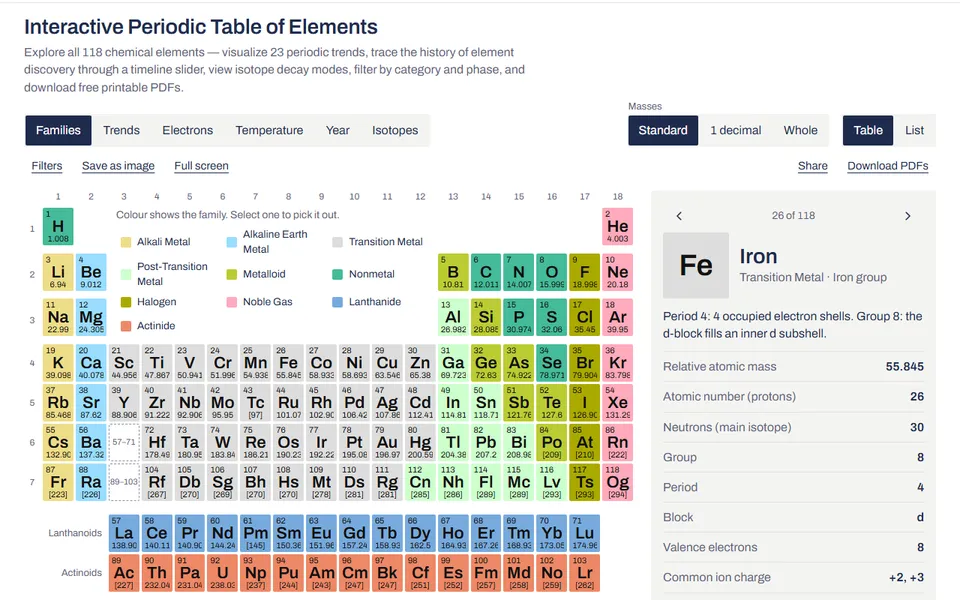
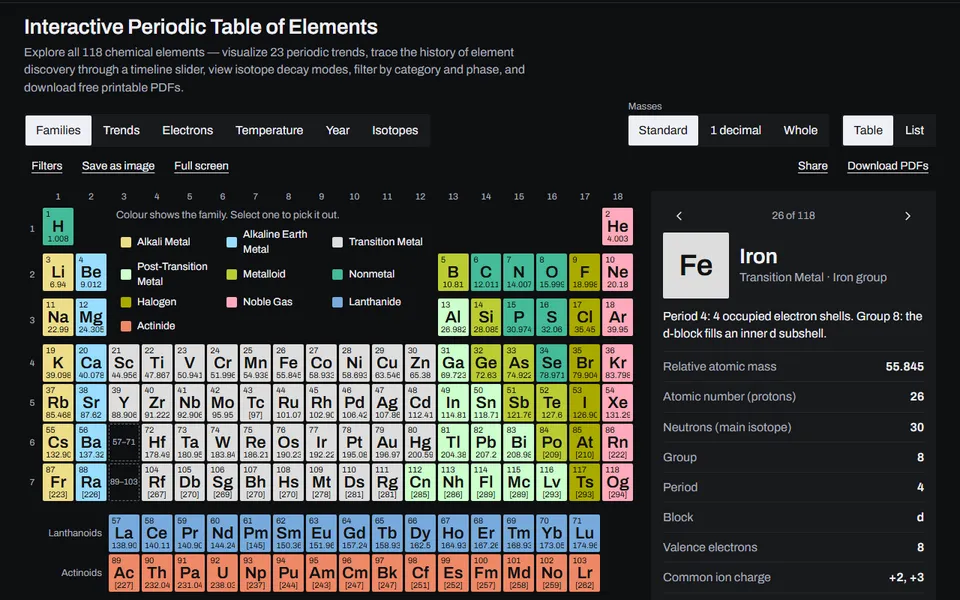
- Interactive periodic table118 elementsColour the elements by family, by any of 23 trends, by year of discovery or by isotopes, and open any element in a side panel.
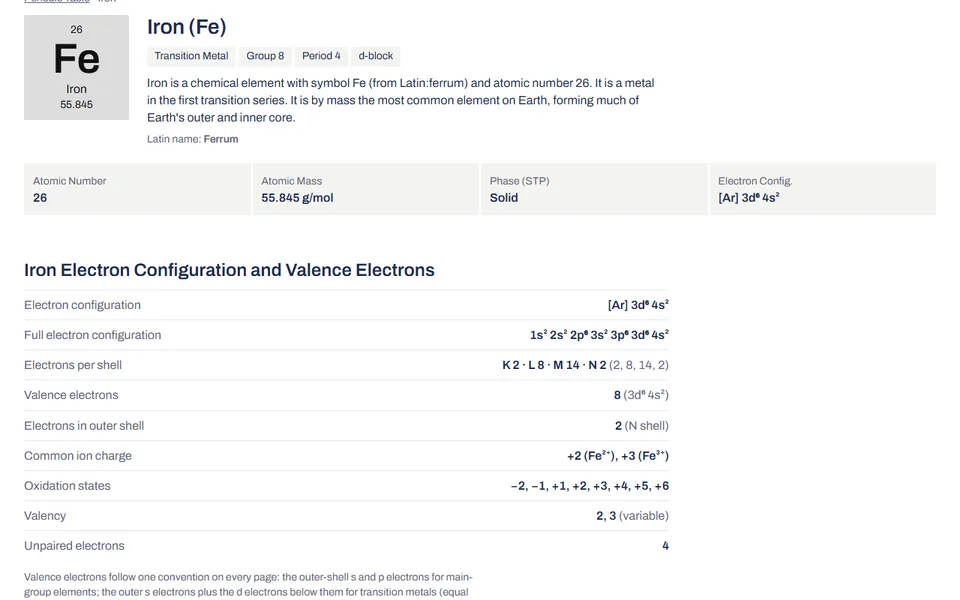
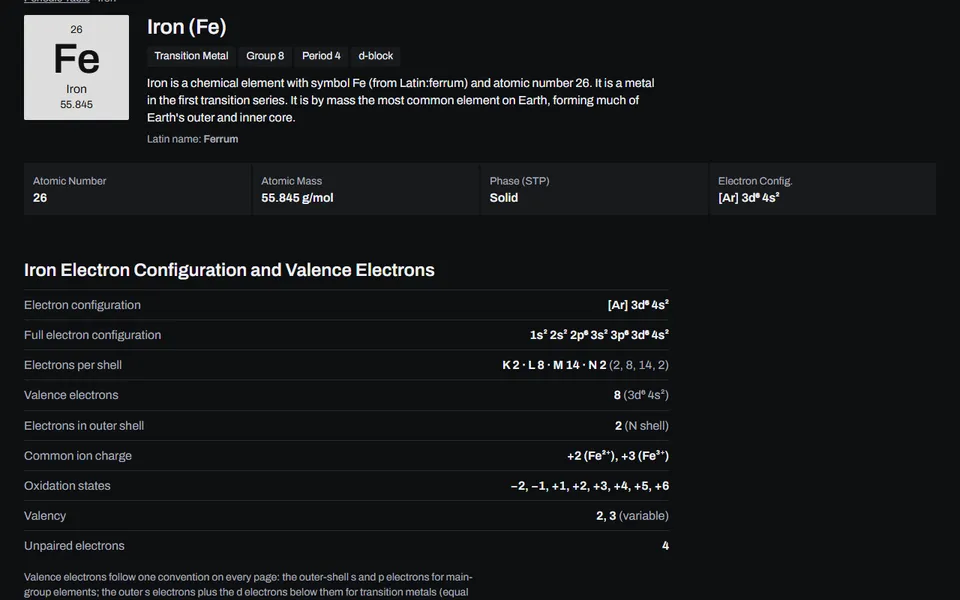
- Element pages118 pagesOne page for each element with its properties, electron configuration, isotopes and orbital diagram.
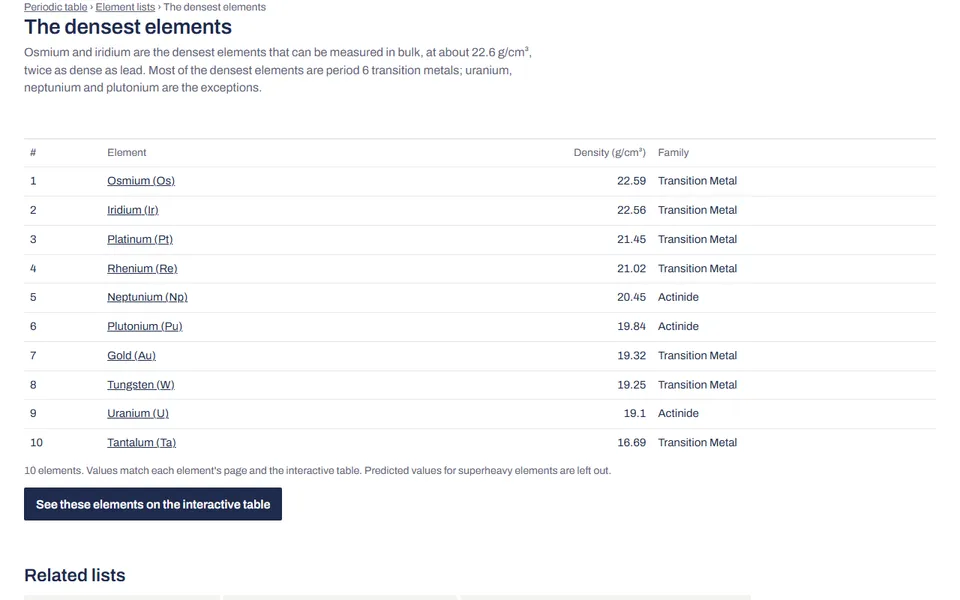
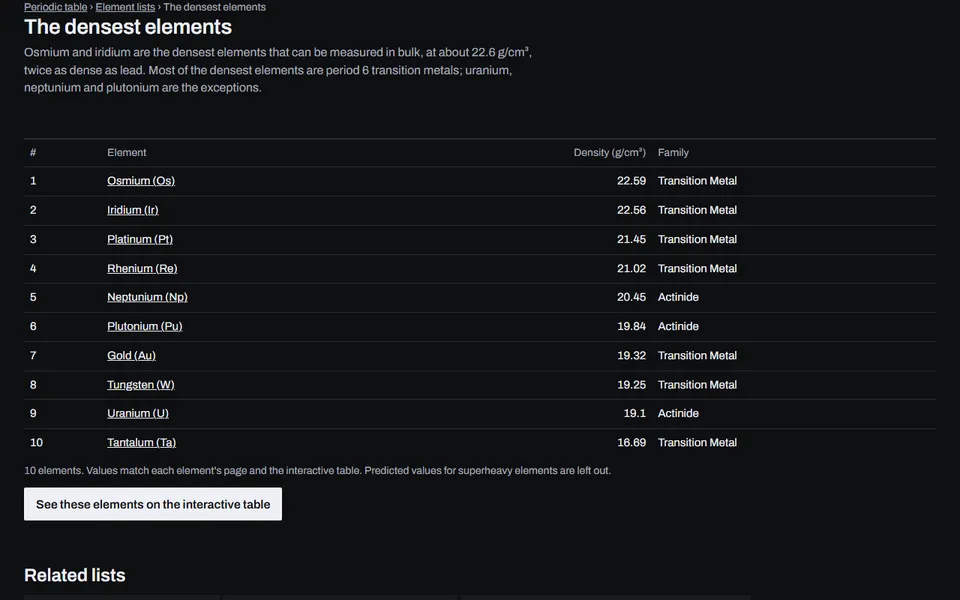
- Element lists11 listsRanked lists such as the densest elements, the best electrical conductors and the elements that are liquid at room temperature.
How elements behave
4 toolsWhat state an element is in, which bond two elements form, how properties relate and what orbitals look like.
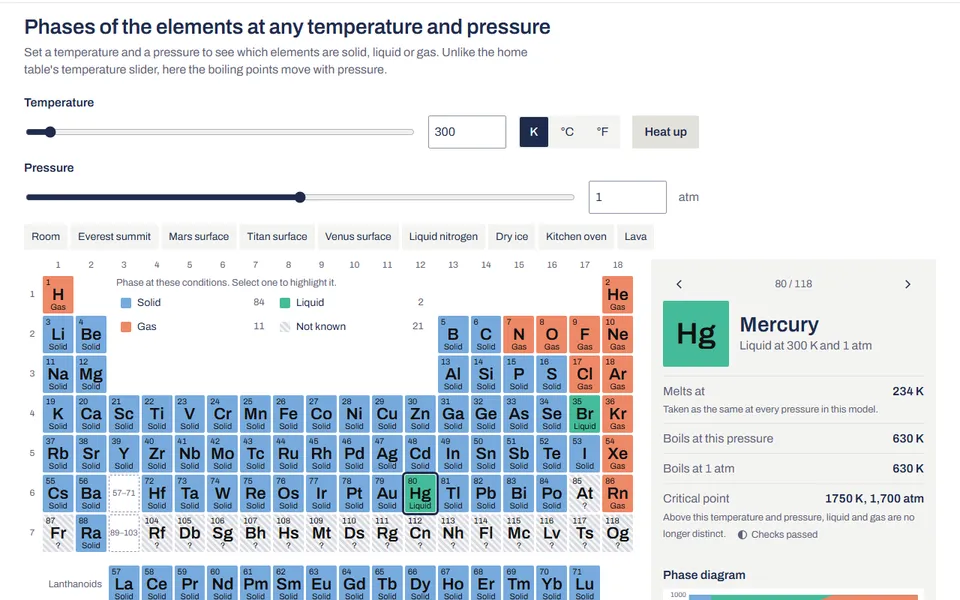
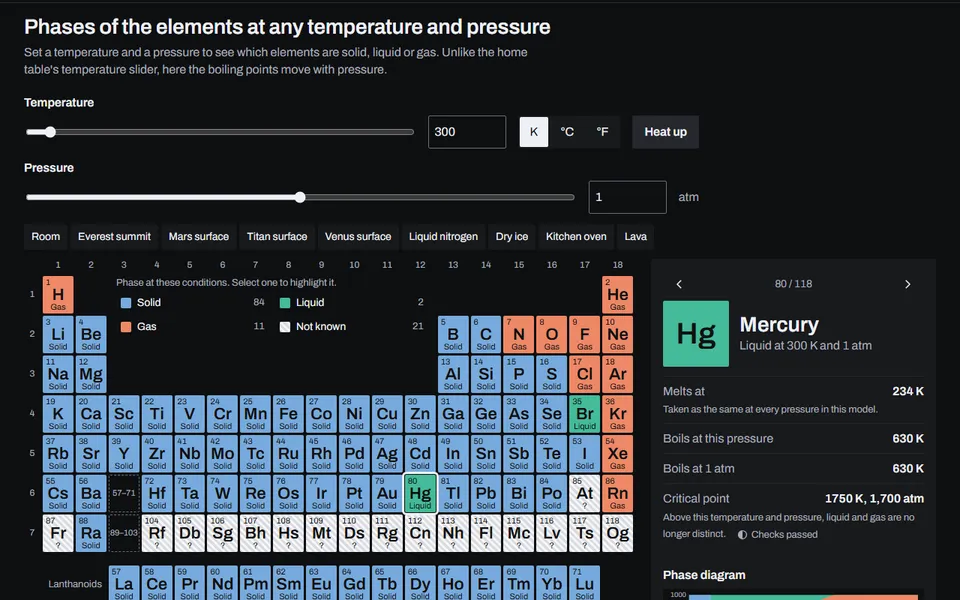
- Phase states118 elementsSet a temperature and pressure and see which elements are solid, liquid or gas, with a phase diagram for each one.New
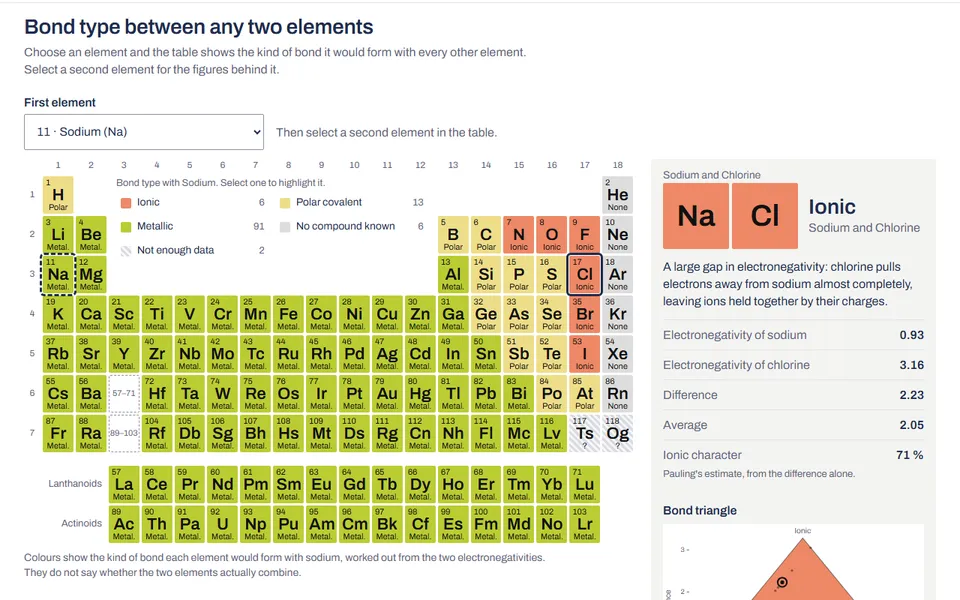
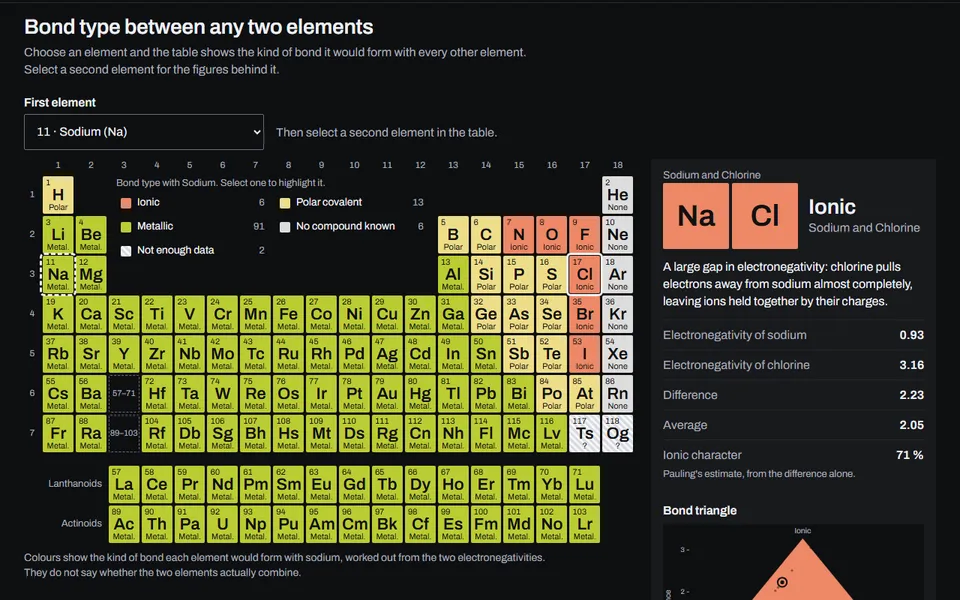
- Bond types6,903 pairsPick two elements to see whether they form an ionic, polar covalent, covalent or metallic bond, worked out from their electronegativities.New
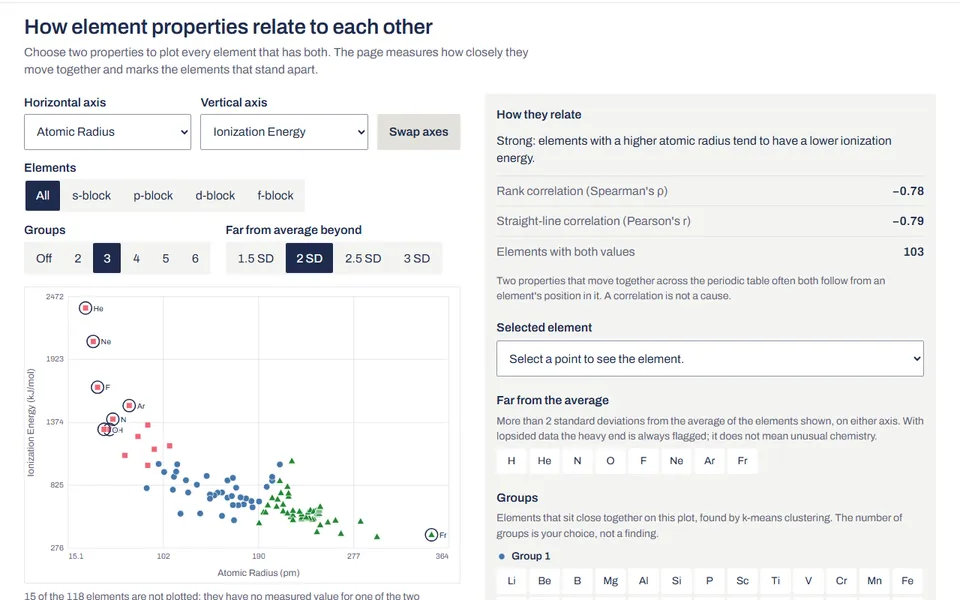
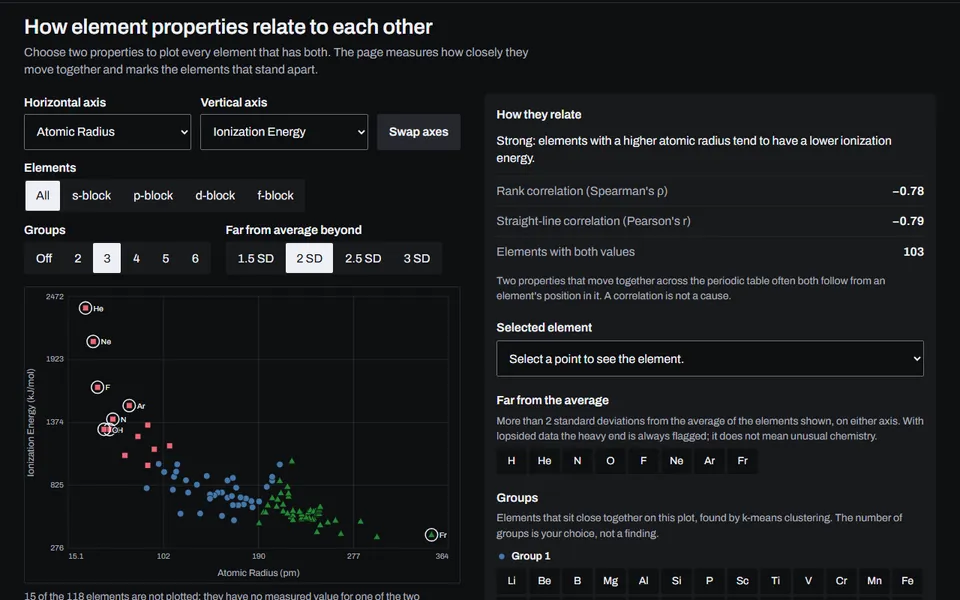
- Property correlations23 propertiesPlot two properties of the elements against each other, see how closely they move together and find the elements that stand apart.New
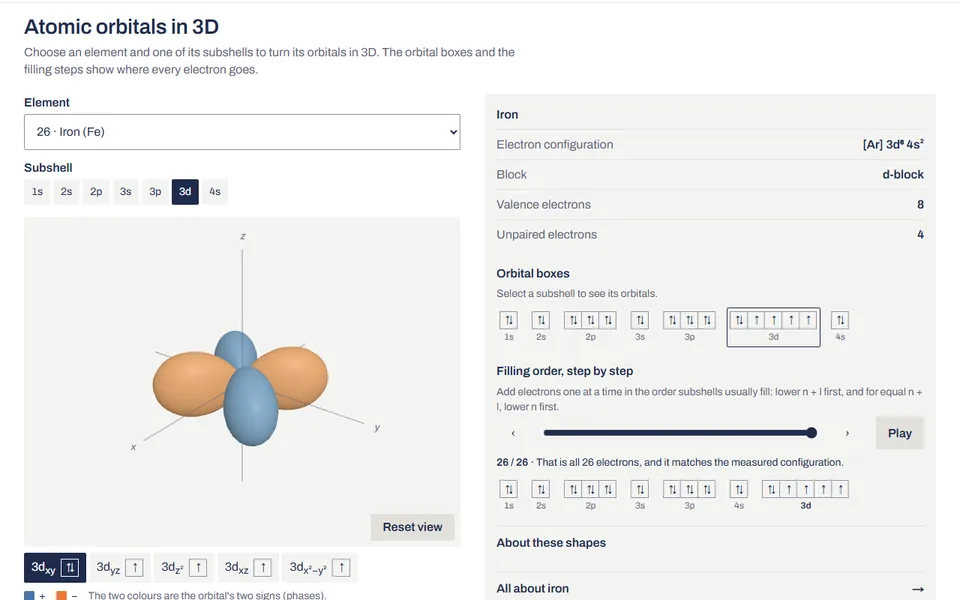
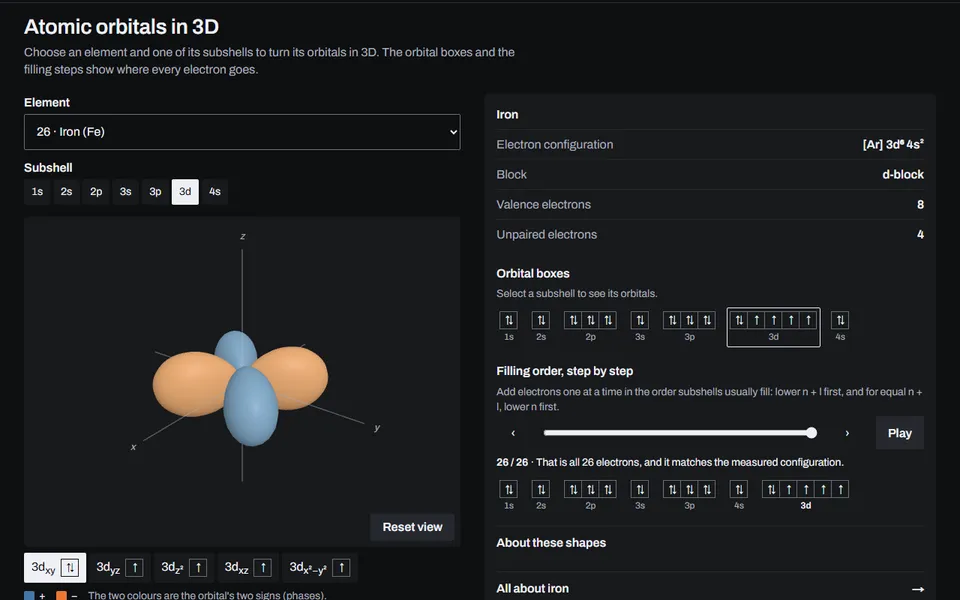
- Orbital shapes118 elementsTurn s, p, d and f orbitals in 3D and watch the subshells of any element fill in order.New
Reactions
3 toolsFind a route to a compound, check a planned synthesis and follow oxidation states step by step.
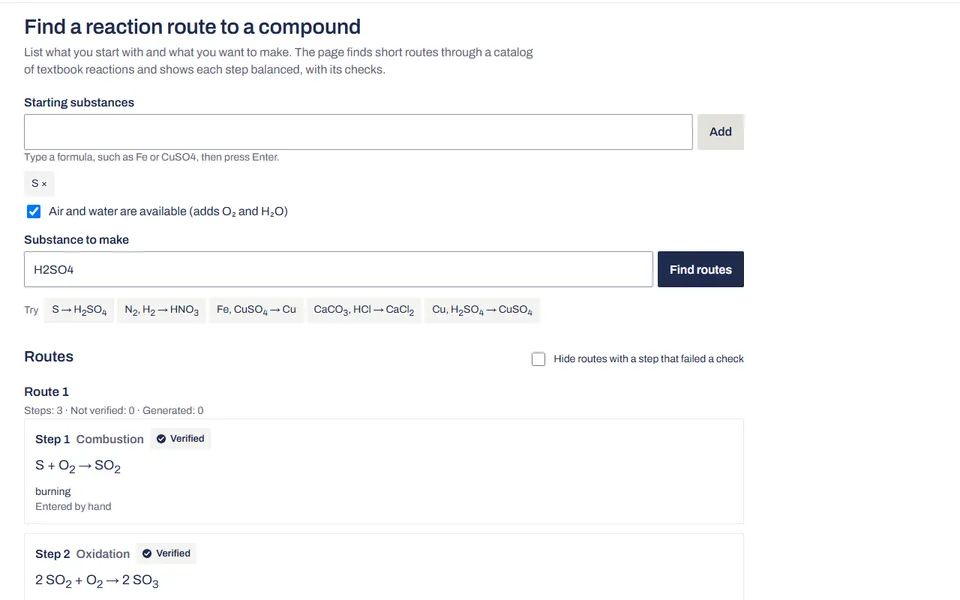
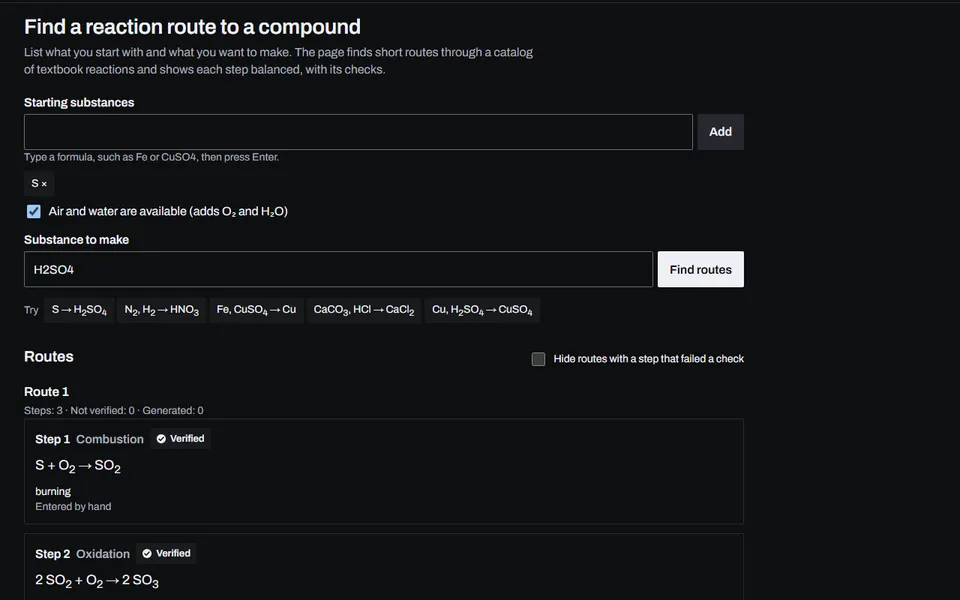
- Reaction pathways1,022 reactionsList what you start with and what you want to make, and get short routes through a catalog of textbook reactions, each step balanced and checked.New
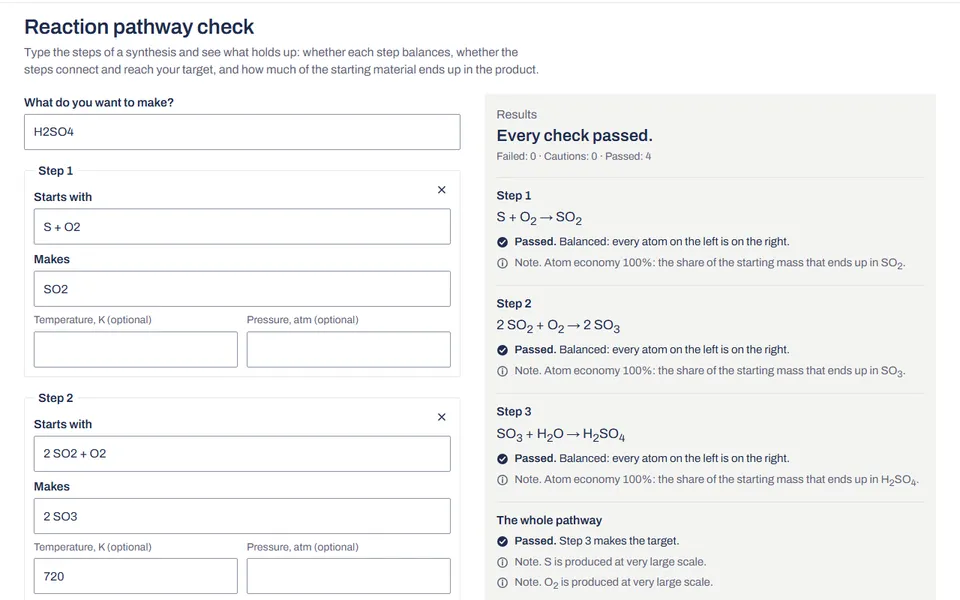
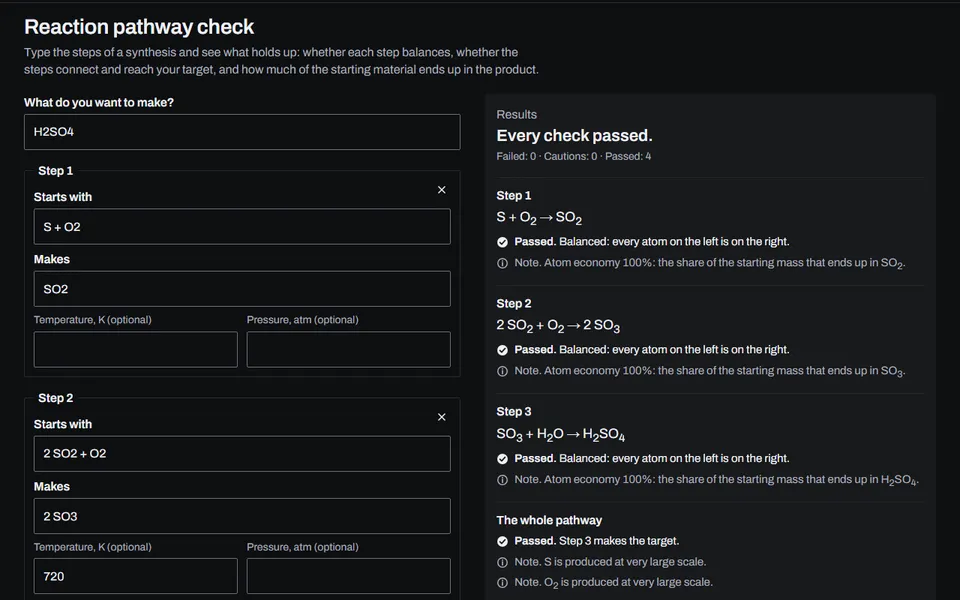
- Reaction pathway checkYour stepsType the steps of a synthesis and see whether each one balances, what it needs and how much of the starting material ends up in the product.New
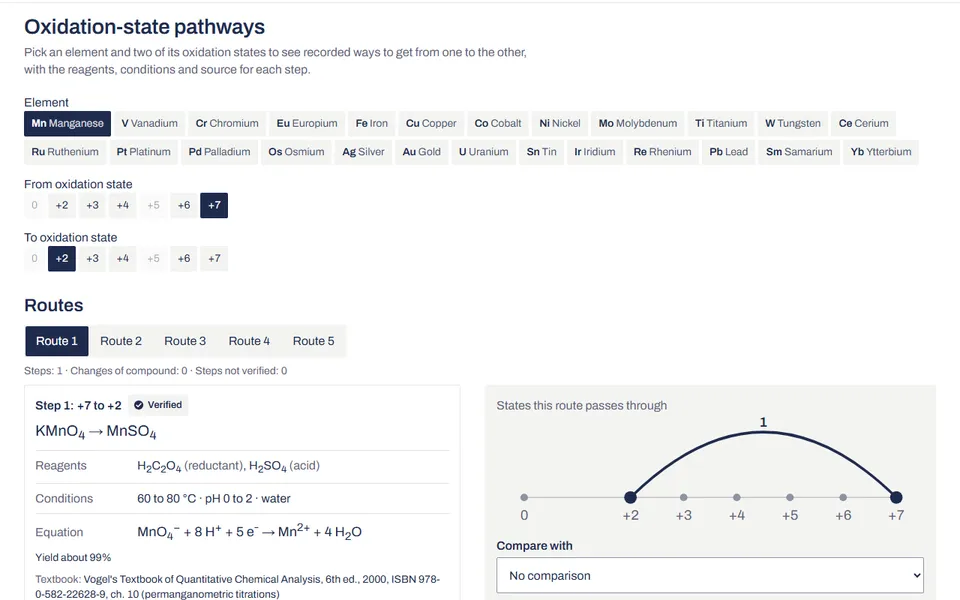
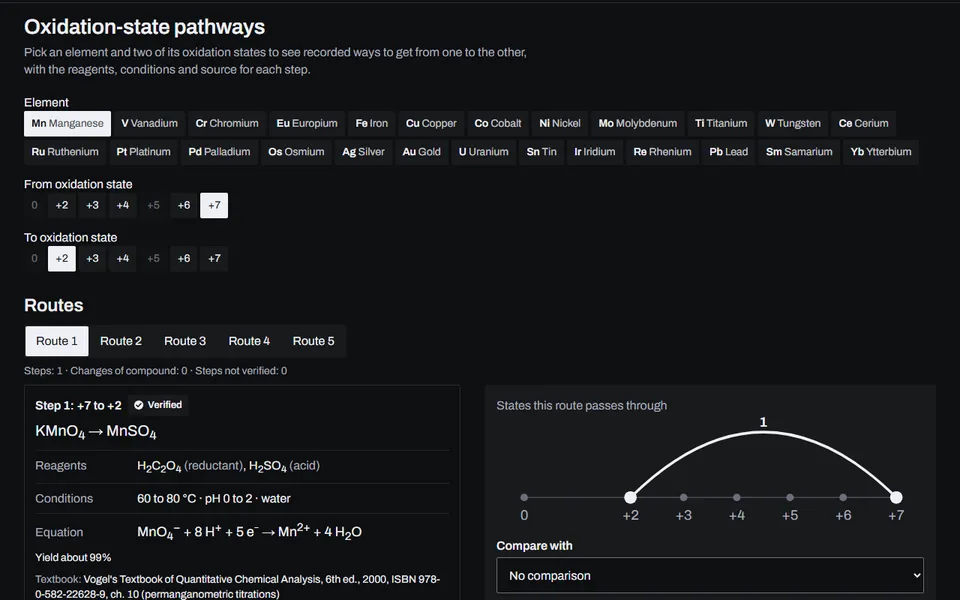
- Oxidation states25 elementsChoose an element and two of its oxidation states to see recorded ways to get from one to the other, with reagents, conditions and sources.New
Where elements come from
2 toolsWho produces each critical element, how concentrated that supply is, and how metals are won from their ores.
- Supply risk23 elementsSee which countries produce each critical element, how concentrated that supply is and how long known reserves would last.New
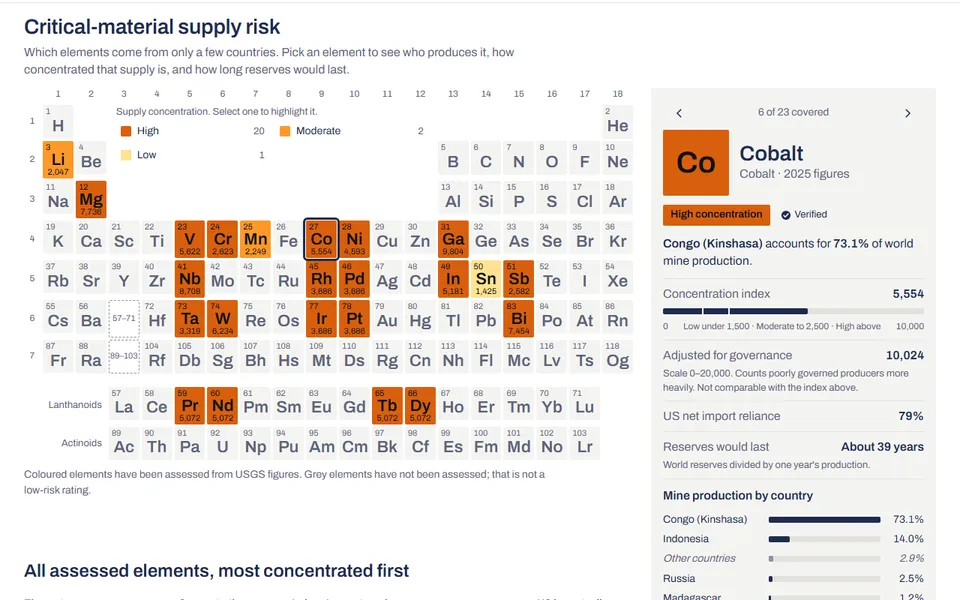
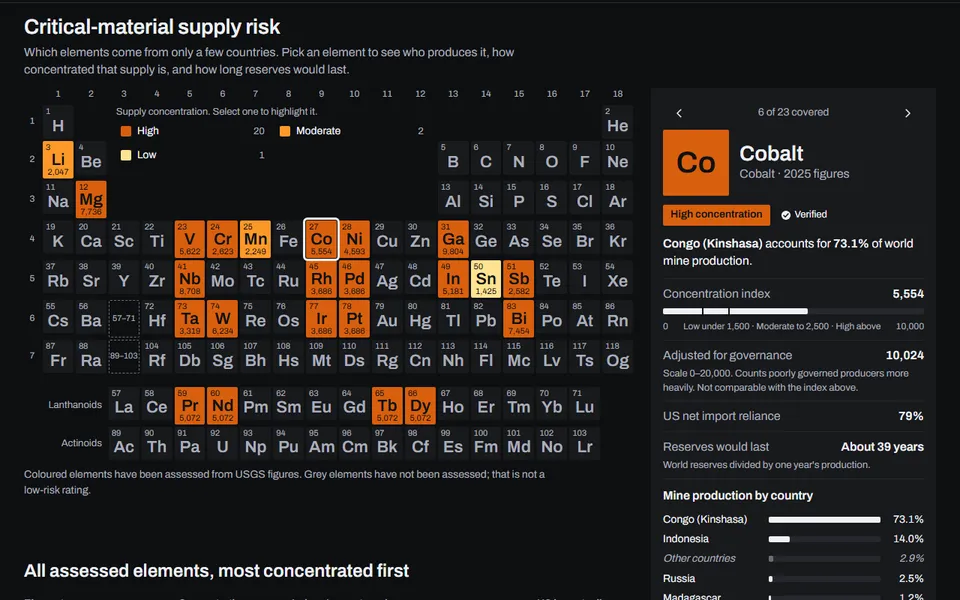
- Element extraction18 elementsSee whether a metal is mined for its own sake or recovered from another ore, which minerals carry it and how it is extracted.New
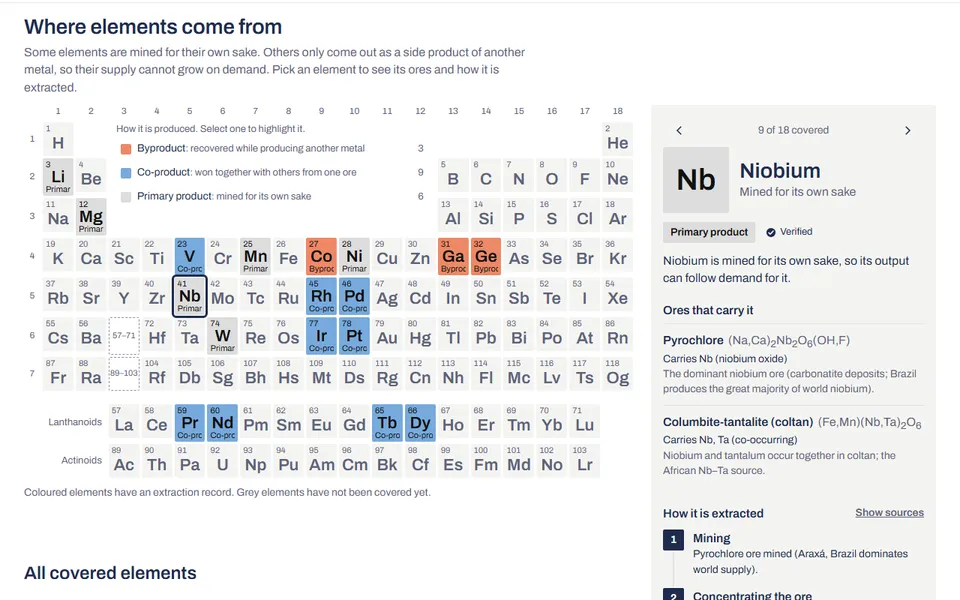
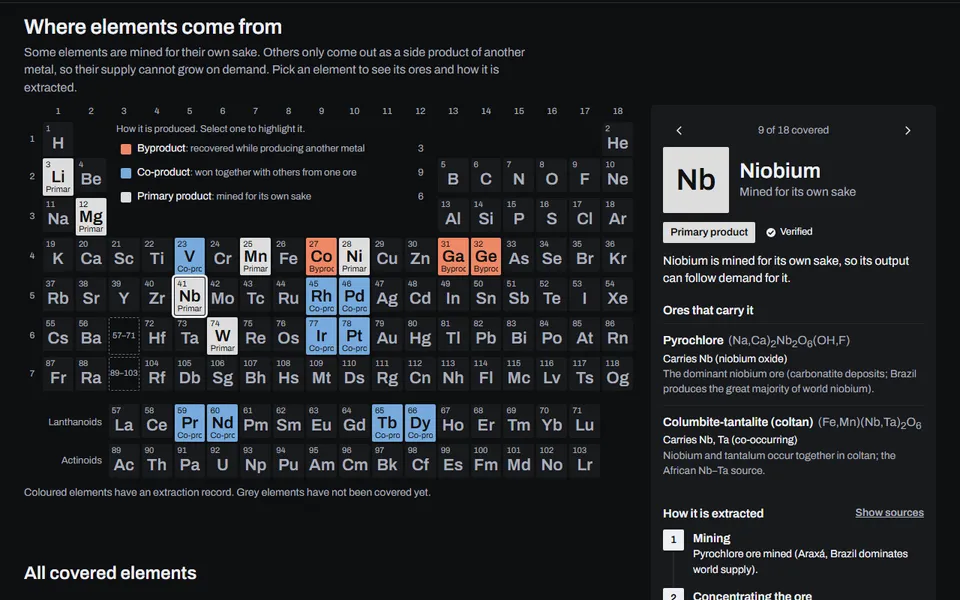
Calculate and convert
2 toolsWorked answers for common chemistry formulas, and conversions between scientific units.
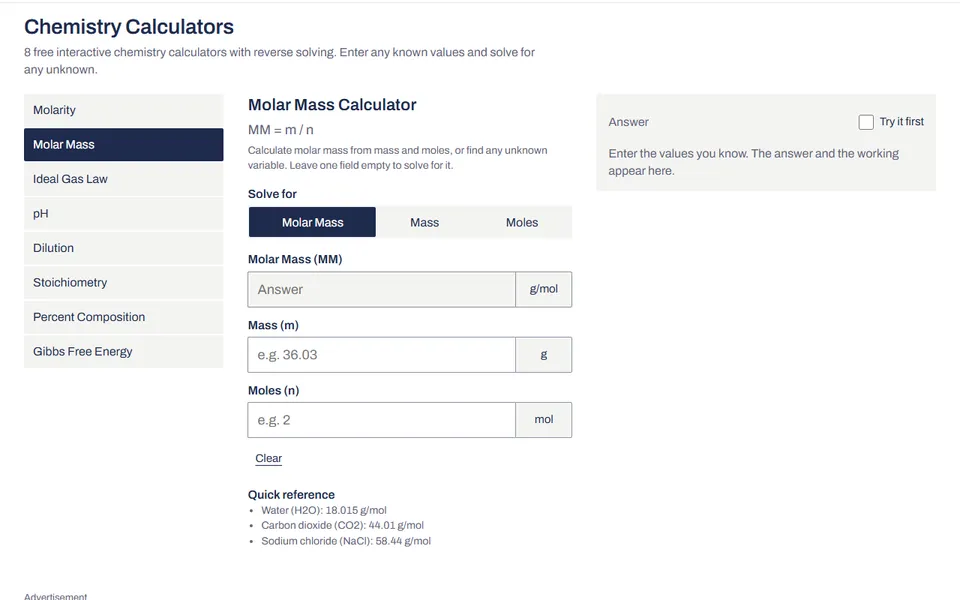
- Chemistry calculators8 calculatorsMolarity, molar mass, ideal gas, pH, dilution and more. Each one solves for whichever value you leave empty and shows the working.
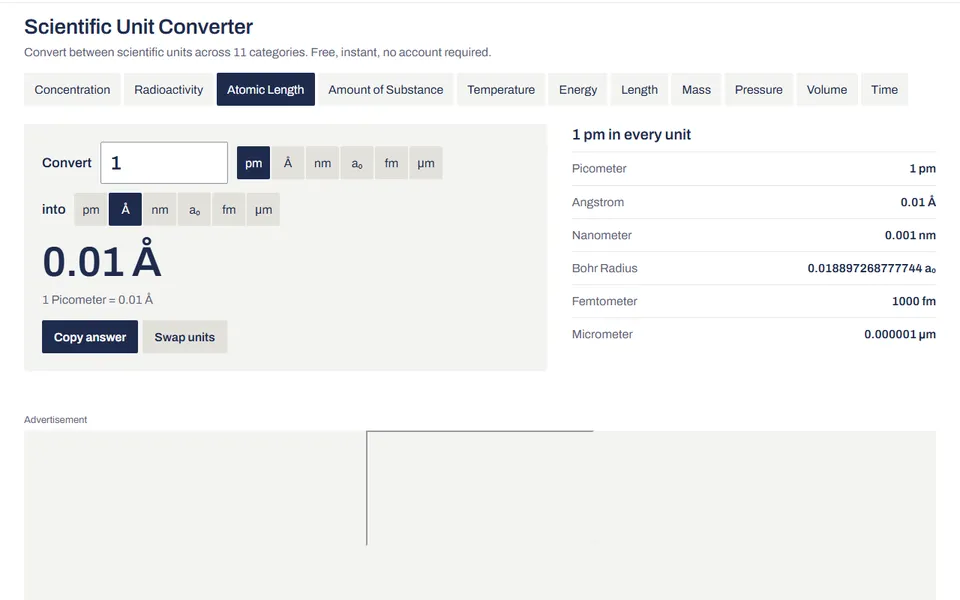
- Unit converter11 kinds of unitConvert length, mass, energy, pressure, temperature, concentration and other scientific units as you type.

Print and read
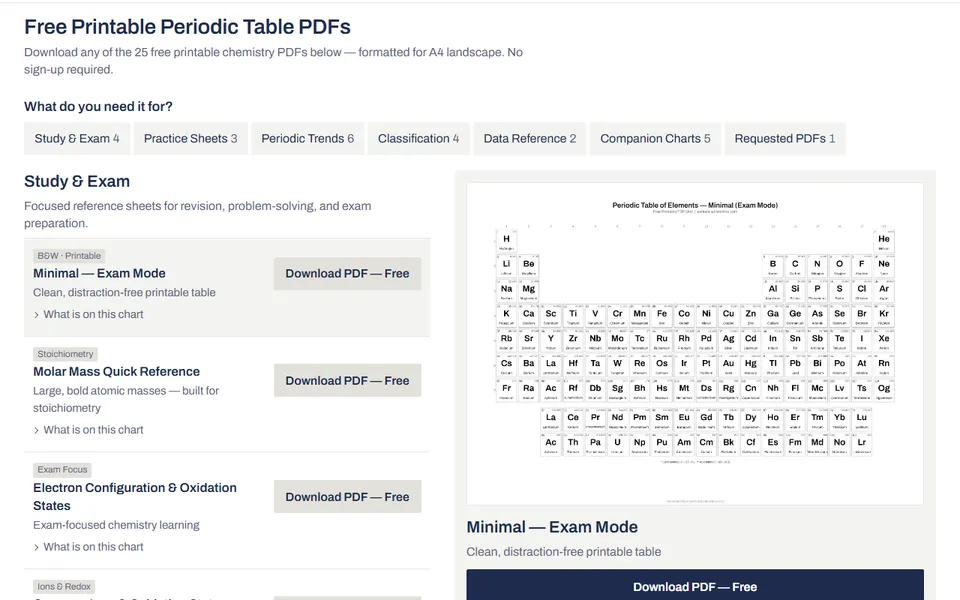
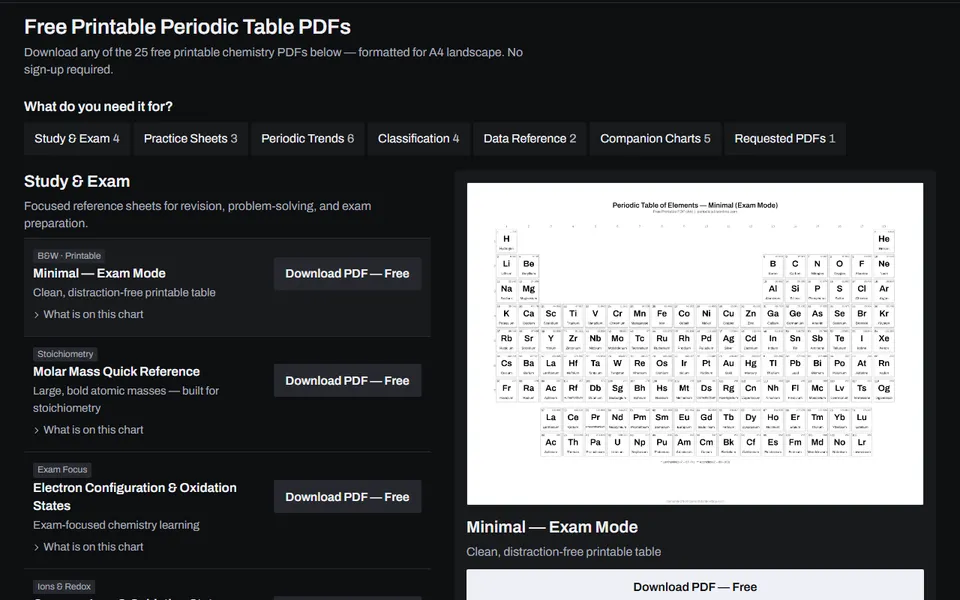
2 toolsPrintable charts and practice sheets, and articles for revision.
Questions about the tools
- Are the tools free?
- Yes. Every tool, PDF and article is free to use. The site is paid for by ads, and nothing needs an account.
- Can I use them in class?
- Yes. The pages work on phones, tablets and classroom screens, and most tools keep their settings in the page address, so a link shows exactly what you are showing.
- Where does the research data come from?
- From published sources: US Geological Survey and European Commission reports, chemistry handbooks and open-access papers. Each result carries a badge that says how it was checked.
- Which languages are they in?
- English, Spanish, Portuguese and French. Choose one from the language menu at the top of any page.